
Attitude
Introduction
Safe driving is all about developing the correct attitude and approach, together with a sound knowledge of driving techniques. However modern, fast or expensive your vehicle, it’s you, the driver, who determines how safe it is.
Consideration
Be considerate to other road users. Other types of vehicle, cyclists and horse riders have just as much right to use the road as you. Do not drive in a competitive way – people who do this cause an increased risk for everyone on the road.
Horses become frightened easily and the rider could lose control. When passing them
• keep your speed down
• give them plenty of room.
Take care if there are animals, such as sheep, on the road. Stop and switch off your engine if necessary or if you’re asked to do so.
If you’re driving a slow-moving vehicle, consider the other drivers behind you. If there’s a long queue
• pull over as soon as you can do so safely
• let the traffic pass.
Try to be considerate. Think how you would feel if you were one of the drivers behind you. They may not be as patient as you are.
Help other road users by signalling correctly and taking up the correct position at junctions or in one-way systems. For instance, if you want to turn right, get into the right-hand lane. A badly positioned vehicle could prevent vehicles behind proceeding.
Following safely
Keep a safe distance from the vehicle in front.
-
In good, dry conditions, leave a two-second gap.
-
In wet weather, leave a four-second gap.
Tailgating (driving too close to the vehicle in front) is
-
very dangerous
-
intimidating for the driver in front.
Keep well back, especially from a large vehicle. You’ll be able to see further down the road and therefore be prepared for any hazards.
If the road user behind is following too closely, gradually slow down to increase the gap between you and the vehicle in front. This will give you a greater safety margin should traffic ahead slow down or stop suddenly.
If another road user cuts in front of you, drop back until you’ve restored your safety margin.
Courtesy
Be patient with other road users. Be aware that not everyone obeys the rules. Try to be calm and tolerant, however difficult it seems. For instance, if a vehicle pulls out in front of you at a junction, slow down and do not get annoyed with them.
Self-reflection: Can you think of a time when driving made you impatient and angry? How did you react? Did you think about doing something dangerous? Ask yourself how your friends and family would feel if your driving created a serious incident. Is it worth taking the risk?
Only sound your horn if there’s danger and you need to let others know you’re there. Do not sound it through impatience.
At night, do not dazzle other drivers. Dip your lights when you’re
• following another vehicle
• meeting another vehicle.
If you’re queuing in traffic at night, use your parking brake (handbrake). Keeping your foot on the brake could dazzle the drivers behind you.
Priority
Give priority to emergency vehicles. It’s important for them to move quickly through traffic. Someone’s life might depend on it. Pull over to let them through as soon as you can do so legally and safely.
As well as fire, police and ambulance services, the following services may use a blue flashing light
• coastguard
• bomb disposal
• mountain rescue
• blood transfusion.
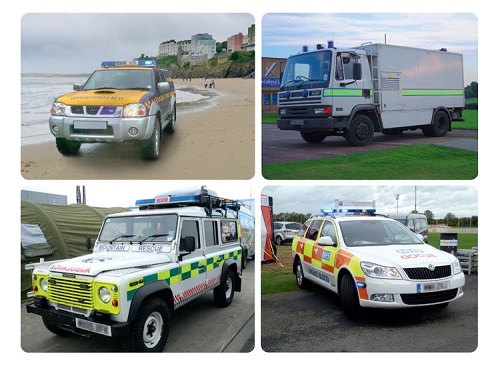
Doctors may use green flashing lights when answering an emergency call.
Give priority to buses pulling out from bus stops, as long as you can do so safely. In some areas, bus lanes allow buses to proceed quickly through traffic. Be aware of road signs and markings so you do not use bus lanes while they’re in operation.
At unmarked crossroads, no-one has priority. Slow down and look both ways before pulling out.
Watch out for pedestrians at or approaching a zebra crossing and
• be ready to slow down and stop
• be patient if they cross slowly
• do not encourage them to cross by waving or flashing your headlights – there may be another vehicle coming.
At some zebra crossings, there is an additional lane for cyclists. This allows cyclists and pedestrians to be kept separate while they’re crossing. Drivers should give way to cyclists on the parallel crossing in the same way they do for pedestrians at a zebra crossing.
If you’re approaching a pelican crossing and the amber light is flashing
• give way to pedestrians on the crossing
• do not move off until the crossing is clear.
Puffin crossings are electronically controlled. Sensors detect when pedestrians are waiting and can cancel demands if they walk away. If sensors detect pedestrians need extra time to finish crossing, the pedestrian phase can be lengthened (up to a preset maximum). This can help pedestrians with mobility problems. These crossings have a steady amber light, like normal traffic lights.
Toucan crossings allow cyclists to cross at the same time as pedestrians.
FAQs
I’ve seen this sign – what does it mean?
This sign applies to trams only. Even if there are not any trams where you live, you still need to know how to deal with them in case you ever visit a town where trams are in operation.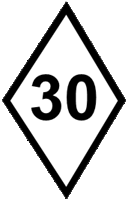
Give cyclists and motorcyclists extra room where there are tram rails. The slippery rails may be difficult for them to negotiate.
Why do large vehicles ‘hog’ the road?
Larger vehicles need more room to manoeuvre. This will affect their position when approaching junctions, especially when turning left. Keep well back and do not try to pass them on the left as the rear of the vehicle will cut in.
A large vehicle is trying to overtake me, but is taking a long time; what should I do?
Slow down and let them pass. They’ll need more time to pass you than a car would.
What do I do if I’m travelling at the speed limit and a driver comes up behind flashing their headlights or trying to overtake?
Keep a steady course and allow them to overtake. Do not try to stop them; they could become more frustrated.
I’m never too sure when I should flash my headlights.
Only flash your headlights to show other road users you’re there. It’s not a signal to show priority or impatience, nor to greet others.
Why is diesel fuel particularly dangerous when spilt?
It’s slippery. Take care when refuelling as there may be spilt fuel on the ground near the pump. Fuel contamination on shoes may cause them to slip when using foot pedals. To avoid spillage after refuelling, make sure your filler cap is securely fastened.
About the Course
Our driving theory test course is designed to make learning simple, structured, and effective. With 14 modules and 140 bite-sized lessons, the entire syllabus is broken down into easy-to-digest sections you can work through at your own pace. Each module includes engaging videos, clear summaries in spider-diagram format, and a test to check your knowledge before moving on. You’ll also have access to unlimited mock exams and hazard perception practice, so you can build confidence as you go. Fully updated for 2026 and mobile-friendly, the course lets you study anytime, anywhere, and track your progress as you prepare for test success.
What You’ll Learn
- The complete driving theory syllabus, divided into 14 clear modules
- Key knowledge explained in short, manageable lessons
- How to spot and respond to hazards with practical hazard perception training
- Retain more information with videos, images, and spider diagram summaries
- Test your knowledge with module quizzes and unlimited mock tests
- Build confidence step by step by tracking your progress
- Study effectively on any device — PC, tablet, or mobile
- Be fully prepared with up-to-date material for 2026 and beyond
