
Safety and your vehicle
Basic maintenance
Regular maintenance should keep your car safe and fit to be on the road. It will also help fuel economy and keep exhaust emissions to a minimum. Check the following items on a regular basis:
-
lights, brakes, steering, exhaust system, seat belts, horn, speedometer, wipers and washers – these must all be working properly
-
oil and water levels – this is especially important before a long journey (be careful not to overfill with oil, as this can cause leaks)
-
brake fluid – if this is allowed to get low, it’s dangerous and could cause an incident
-
battery levels – unless it’s a maintenance-free battery, it may need topping up with distilled water (to just above the cell plates)
-
the windscreen – this must be in good condition
-
tyre pressures – check regularly, at least once a week. Do this when they’re cold to get a more accurate reading. Under-inflated tyres can affect:
-
steering – it will feel heavy
-
fuel consumption – it may increase
-
braking
-
-
tyre condition – the tread (on car and trailer tyres) must be at least 1.6 mm deep across the central three-quarters of the breadth of the tyre and around the entire circumference. It’s illegal to drive with tyres that have deep cuts in the side walls.
Uneven wear on the tyres can be caused by faults in the
-
braking system
-
suspension
-
wheel alignment.
If the wheels are unbalanced, they could cause the steering to vibrate.
You MUST NOT leave your vehicle unattended with the engine running on a public road.
Defects
If you have a basic understanding of how your car works, it’ll help you recognise the signs of a defect. It’s important that your car is checked regularly by a qualified mechanic, especially the brakes and the steering.
Warning lights on the dashboard tell you about the performance of the engine and warn you of any faults.
-
Check your vehicle handbook for their meaning.
-
Do not ignore the warning – it could affect your safety.
The ABS warning light should go out when the vehicle’s travelling at 5 to 10 mph (8 to 16 km/h). If it does not, have it checked by a qualified mechanic.
To check the condition of the shock absorbers, ‘bounce’ the vehicle. Push down hard over each wheel: there should be no more than one rebound when released.
Consult a garage as soon as possible if
-
the steering vibrates – you may need to have the wheels balanced
-
the vehicle pulls to one side when you brake – your brakes may need adjusting.
Safety Equipment
Modern cars are fitted with equipment designed to keep you as safe as possible.
Wear your seat belt and make sure your passengers wear theirs (unless exempt). You, as the driver, are responsible for making sure that children under 14 wear a suitable restraint. If a correct child restraint is not available in the rear seat, an adult seat belt MUST be used.
Never fit a rear-facing baby seat in a seat protected by an active airbag. This could cause fatal injuries. The airbag MUST be deactivated first.
Self-reflection: Not wearing a seat belt can have serious consequences for you, your passengers and other road users. Have you ever driven without wearing a seat belt? How would you feel if you injured yourself – or someone else – in a road traffic incident? Remember, if you’re caught without wearing a seat belt you could be fined up to £500.
When you get into the car
-
adjust the seat to ensure you can reach all the controls in comfort.
-
adjust the head restraint to help prevent neck injury in a collision.
-
wear suitable shoes so that you can keep control of the pedals.
-
adjust the mirrors to maximise your field of vision. Convex mirrors give a wider view but can make vehicles look further away than they are. If you’re reversing and cannot see behind you, get someone to guide you.
If visibility’s poor, use dipped headlights. It’s important for other road users to see you. If there’s thick fog, use your fog lights.
When leaving your car on a two-way road at night, park in the direction of the traffic. If the speed limit is over 30 mph, switch on your parking lights.
Hazard warning lights are fitted so you can warn drivers of a hazard ahead, such as
• when you’ve broken down
• queuing traffic on a dual carriageway or motorway.
Do not use them as an excuse to park illegally, even for a short time.
Advanced driver assistance systems
Advanced driver assistance systems (ADAS) are a group of technological features designed to improve road safety. Most modern cars are fitted with several ADAS features; for example, anti-lock braking systems, high-beam assist and cruise control.
You should be aware of the ADAS in your car and how to use them. They are there to help you stay safe but do not take away your responsibility to remain in control of the car. You must continue to be focused on the road and your surroundings at all times.
For specific information on the ADAS in your vehicle, consult your manufacturer’s handbook.
Security
Make it as difficult as you can for a thief to either break into your car or steal it by
-
engaging the steering lock
-
removing the keys – lock your car even if you’re only leaving it for a short time
-
locking any contents, especially valuables, out of sight or, better still, taking them with you
-
not leaving the vehicle registration document in the car. The thief could declare ownership
-
parking in a well-lit area or in a secure car park at night when possible.
To make it more difficult for the opportunist thief, you can
-
fit an anti-theft alarm or immobiliser
-
use a visible security device, such as a steering-wheel or handbrake lock
- have the vehicle registration number etched on the windows.
Radios and other forms of in-car entertainment are prime targets for thieves. If you can, install a security-coded radio. This would be of little use if it were stolen.
Considering Other Road Users
Avoid parking your vehicle where it would cause an obstruction to other road users, such as
-
in front of a property entrance
-
at or near a bus stop
-
opposite or within 10 meters (32 feet) of a junction (in Northern Ireland, within 15 meters or 48 feet of a junction), except in an authorized parking space
-
near the brow of a hill
-
where the kerb has been lowered for wheelchair access
-
on a bend or opposite a side road.
Never stop or park on or near a level crossing, or on the zigzag lines at a pedestrian crossing. This would block the view of pedestrians and drivers, endangering people trying to use the crossing.
Environment
Motor vehicles can harm the environment, causing air pollution, while using up natural resources that cannot be replaced.
Help the environment by driving in a fuel-efficient manner. This will help improve road safety, reduce exhaust emissions, and reduce your fuel consumption.
You should
-
reduce your speed – vehicles travelling at 70 mph use up to 15% more fuel than those travelling at 50 mph.
-
plan well ahead so that you can drive smoothly – avoiding rapid acceleration and heavy braking can cut your fuel bill by up to 15%.
-
change up as soon as you can so that you use the highest possible gear without making the engine struggle. Keeping the engine revs down uses less fuel
- have your vehicle regularly serviced and tuned properly
- make sure your tyres are correctly inflated.
Avoid
-
carrying unnecessary loads or leaving an empty roof rack on your car
-
over-revving the engine in lower gears
-
leaving the engine running unnecessarily – if your vehicle is stationary and likely to remain so for more than a few seconds, switch off the engine.
You MUST NOT leave your vehicle unattended with the engine running. Always switch off the engine and secure the vehicle before leaving it.
If you’ll be waiting for some time for a passenger, switch off the engine while parked.
Try not to use your car to make a lot of short journeys; think about walking or cycling instead. Using public transport or sharing a car can reduce the volume of traffic and the emissions it creates. For example, modern trams use electric power. They reduce and noise pollution.
At all times, and especially after refuelling, make sure your filler cap is securely fastened. If it’s loose, it could spill fuel, which wastes both fuel and money. Spilt diesel fuel also makes the road slippery for other road users.
Having your car serviced regularly will give better fuel economy and your exhaust emissions will be cleaner. If your vehicle is over 3 years old (over 4 years old in Northern Ireland), it will have to pass an emissions test as part of the MOT test.
If you service your own vehicle, dispose of old engine oil and batteries responsibly. Take them to a local-authority site or a garage. Do not pour oil down the drain.
Also bear in mind noise pollution. In built-up areas, you MUST NOT use your car horn between 11:30pm and 7am, unless another vehicle poses a danger.
Continuous high speeds could increase the risk of breakdown. Make sure you check your vehicle before making a long motorway journey; particularly oil, water and tyre pressure.
Avoiding Congestion
You’ll have an easier and more pleasant journey if you:
-
plan your route before starting out
-
avoid busy times, if possible
-
allow plenty of time for your journey, especially if you have an appointment to keep or a connection to make.
Plan your route by:
-
looking at a map
-
using satellite navigation equipment
-
checking with a motoring organisation
-
using a route planner on the internet.
If you’re travelling on a new or unfamiliar route, it’s a good idea to print out or write down the directions, and also to plan an alternative route in case your original route is blocked.
If you can avoid travelling at busy times, you’ll
-
be less likely to be delayed
-
help to ease congestion for those who have to travel at these times.
In some areas, you may have to pay a congestion charge to use congested road space. In London, you may also have to pay the Ultra Low Emission Zone (ULEZ) and/or Low Emission Zone (LEZ) charges.
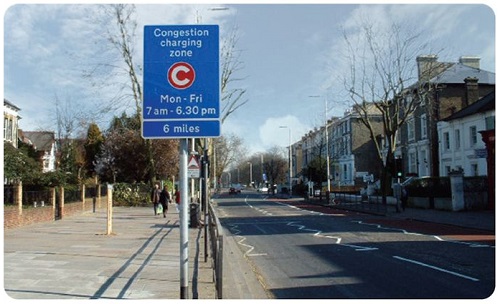
Residents living within the London charging zone obtain a reduced rate but are not exempt.
About the Course
Our driving theory test course is designed to make learning simple, structured, and effective. With 14 modules and 140 bite-sized lessons, the entire syllabus is broken down into easy-to-digest sections you can work through at your own pace. Each module includes engaging videos, clear summaries in spider-diagram format, and a test to check your knowledge before moving on. You’ll also have access to unlimited mock exams and hazard perception practice, so you can build confidence as you go. Fully updated for 2026 and mobile-friendly, the course lets you study anytime, anywhere, and track your progress as you prepare for test success.
What You’ll Learn
- The complete driving theory syllabus, divided into 14 clear modules
- Key knowledge explained in short, manageable lessons
- How to spot and respond to hazards with practical hazard perception training
- Retain more information with videos, images, and spider diagram summaries
- Test your knowledge with module quizzes and unlimited mock tests
- Build confidence step by step by tracking your progress
- Study effectively on any device — PC, tablet, or mobile
- Be fully prepared with up-to-date material for 2026 and beyond
